Introduction
When people think of Japanese food, many may imagine sushi or ramen.
But in my family, the food that supports our daily meals the most is something much simpler: rice.
In our home, we often eat rice for breakfast, lunch, and dinner.
Of course, we also eat bread and noodles sometimes.
Still, I feel that rice is at the center of our everyday table.
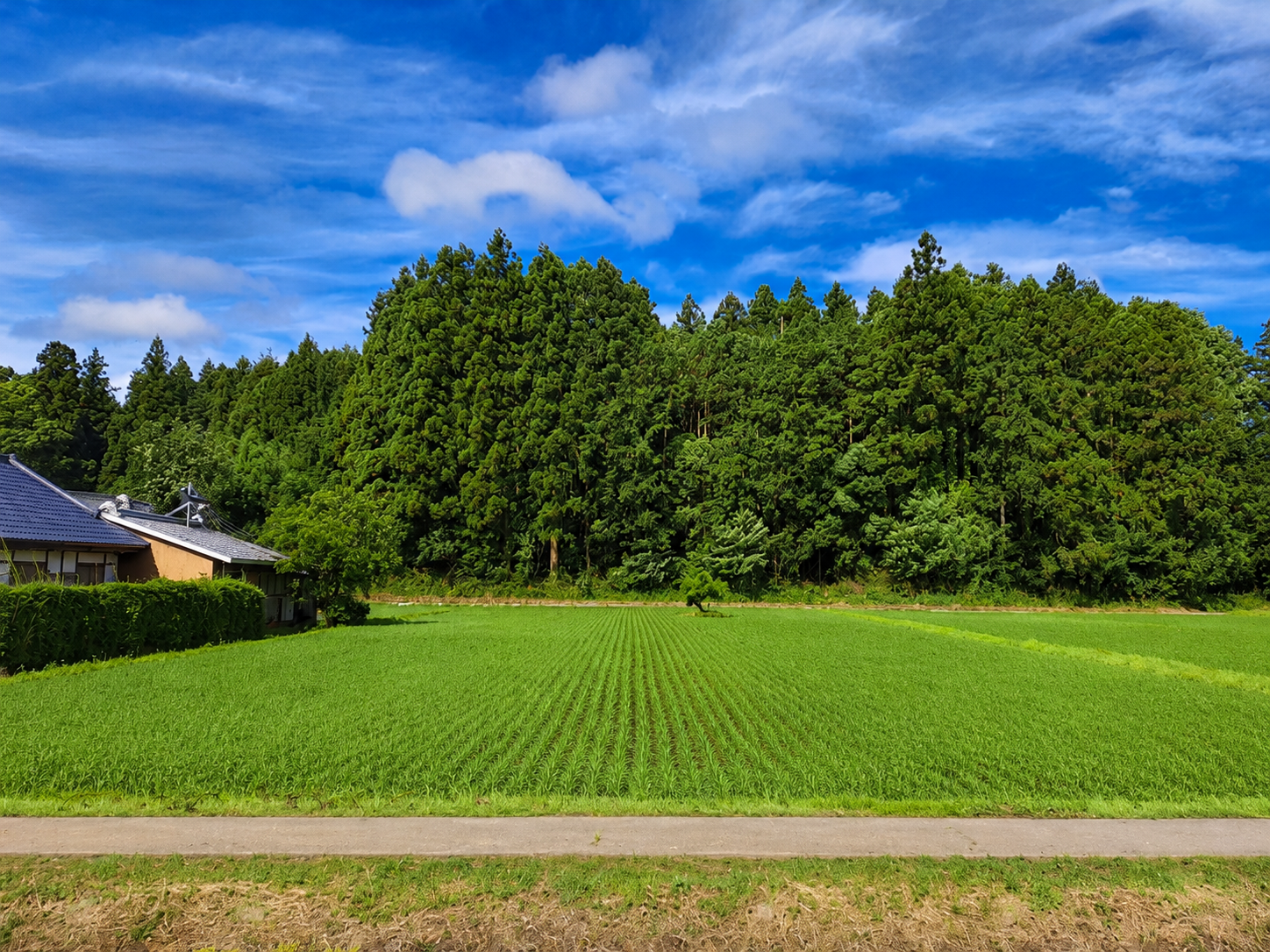
In this article, I would like to share what rice means in a Japanese family, how my family eats it, and what I feel when I see rice fields in this season.
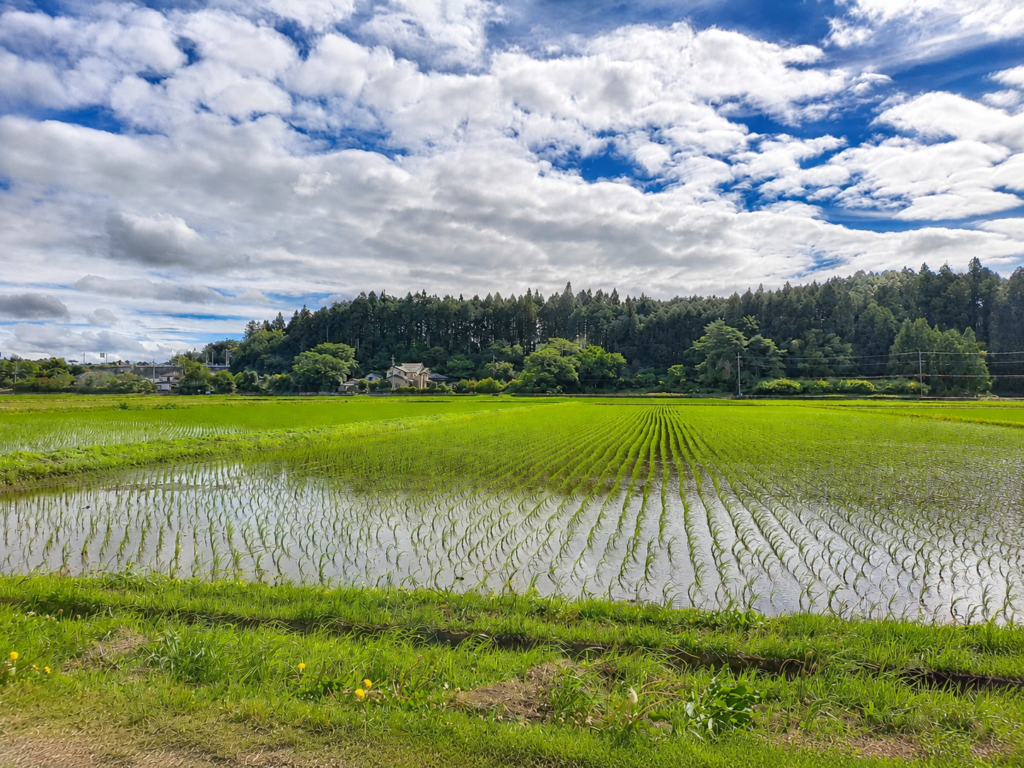
Early summer rice fields. In Japan, rice growing starts seriously around this season.
Rice in Japanese Family Life
In Japan, rice has been a staple food for many families for a long time.
Even today, many families enjoy meals with rice, miso soup, and side dishes.
However, not every Japanese family eats rice every day.
Some families eat bread for breakfast, and some families often eat noodles.
Actually, when I was a child, I often ate bread for breakfast because of my father’s influence.
So, I know that every family has its own style.
Still, in my own feeling, rice is still an important part of Japanese home cooking.
It is not a special luxury food.
It is more like a quiet food that supports everyday life.
Our Family Table
In my family, my children also like rice.
One of my children sometimes says, “I like salt onigiri.”
Salt onigiri is a very simple food.
You just add a little salt to rice and shape it by hand.
Even without any filling, you can enjoy the taste of the rice itself.
The onigiri in this photo was made by me this morning for my family.
There is no special filling inside.
It is just a very simple salt onigiri.
But on busy mornings, this kind of food is very helpful.
If we have cooked rice, I can make it quickly.
It is also easy for children to hold and eat by themselves.
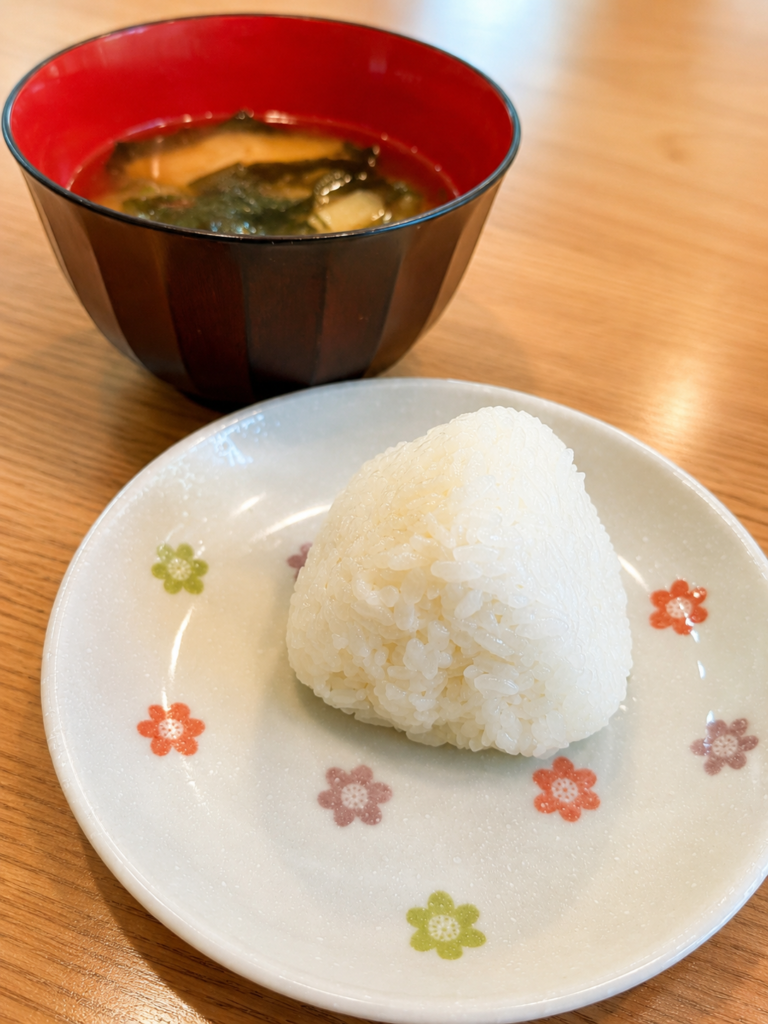
A simple salt onigiri I made this morning. With miso soup, this is a common breakfast scene in our home.
The Season of Rice Growing
In Japan, the timing depends on the region, but rice planting is often done from spring to early summer.
When water fills the rice fields and small rice plants are lined up, I feel that another rice-growing season has begun.
In the area where I live, rice field scenery spreads out around this time of year.
The water-filled fields and green rows of young rice plants are one of the familiar scenes of rural Japan.
In recent years, I have heard that the number of rice farmers is decreasing.
Farming takes a lot of time, effort, and care.
Because of that, I feel that the rice we eat every day should not be taken for granted.
Someday, I would like to try growing rice by myself.
I know it is not easy, but I feel there is great meaning in growing food for my own family.
A Note for Readers Outside Japan
In some countries, rice may be eaten as one part of a dish.
In Japan, rice is often seen as the center of the meal.
For example, a common home-style meal may include rice, miso soup, and side dishes such as fish, meat, eggs, or vegetables.
The rice itself is usually not strongly flavored.
Instead, we eat it together with side dishes.
Rice can also become a simple meal by itself, like onigiri.
Onigiri is sold in many convenience stores in Japan, and it is a very familiar food.
Of course, this does not mean every Japanese family eats in the same way.
Some families eat bread often, and some families enjoy noodles such as pasta or ramen.
In my family, rice is often at the center of the table.
This does not mean rice is the only correct choice.
It simply means rice is useful for our family, and we like it.
Summary
Rice is an important food that supports our family table every day.
We often eat rice for breakfast, lunch, and dinner, and my children also enjoy it.
Salt onigiri is especially simple, but it lets us enjoy the taste of rice.
For a busy family raising children, rice is very helpful.
When I look at rice fields, I remember that the rice we eat every day is made with a lot of time and effort.
Through this blog, I will continue to share real Japanese family life and everyday meals based on my own family experience.
コメント