Summer Vacation Is Not Only a Long Break
For elementary school children in Japan, summer vacation is a special time of year. Regular classes stop for several weeks, but it is not always a period with nothing to do.
Children may work on homework and independent research projects, play with friends, or spend weekdays at after-school childcare programs. In some areas, schools also open their swimming pools during part of the summer.
In this article, I want to focus on the everyday structure of summer vacation for elementary school children in Japan.
Homework and Independent Research
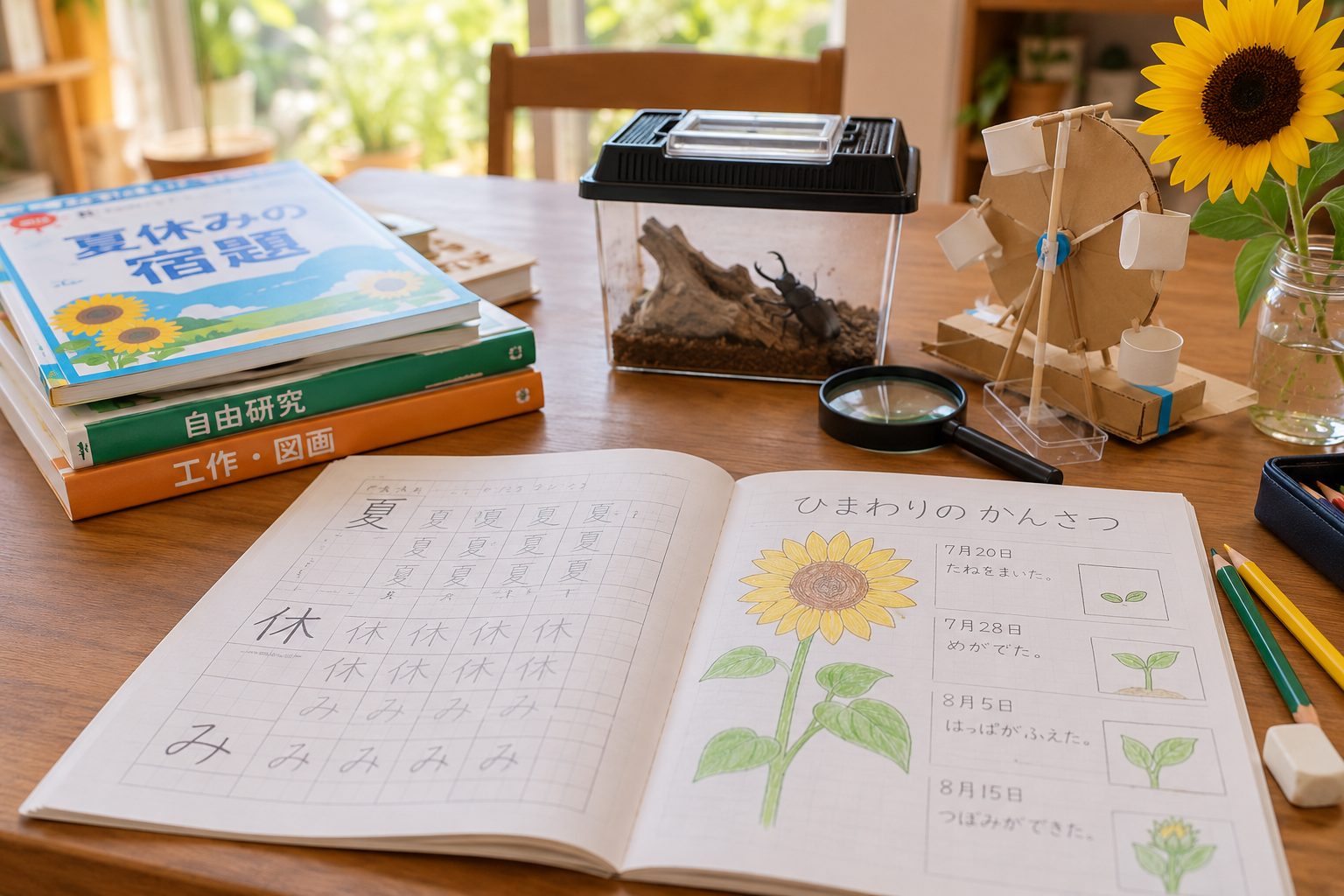
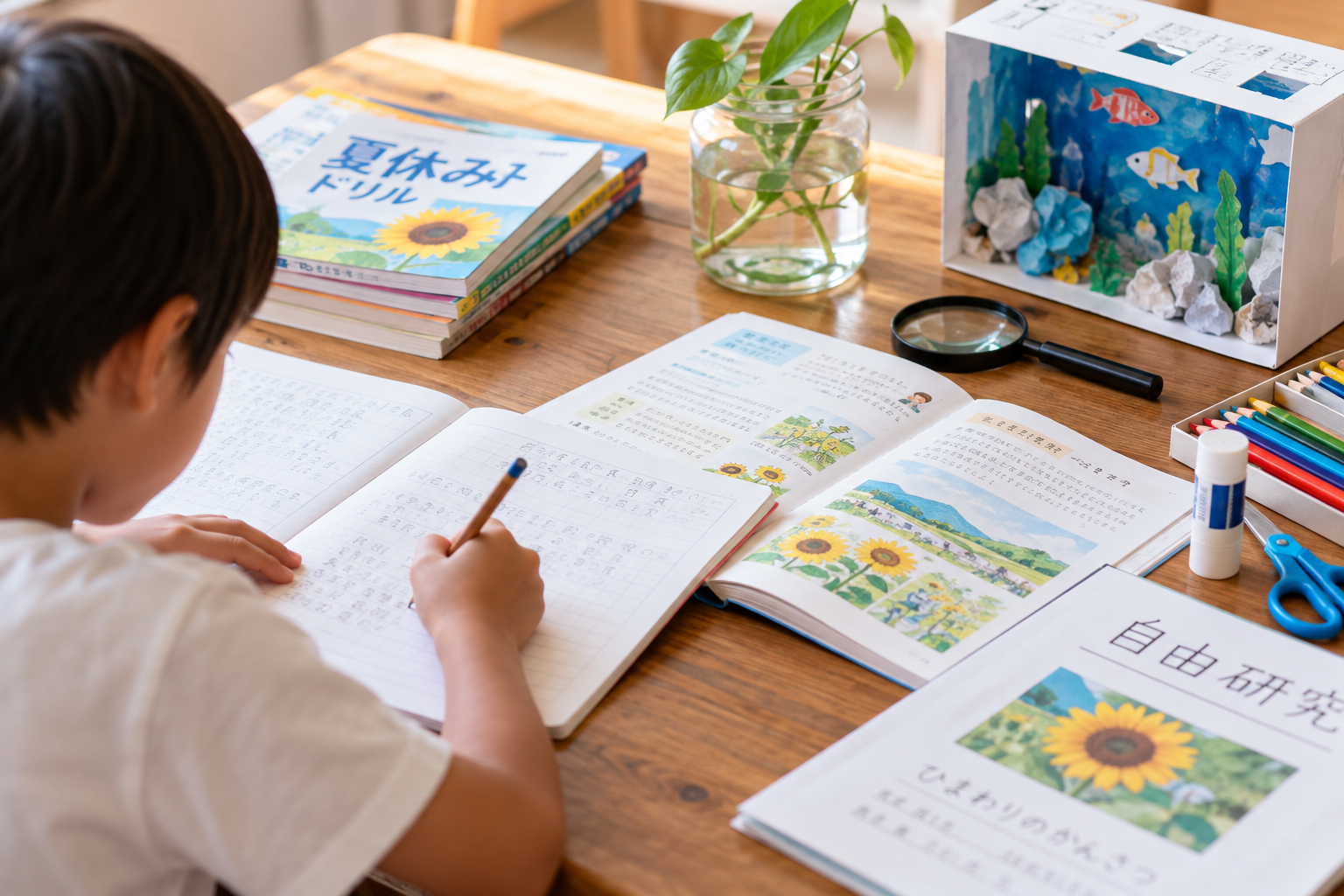
Many elementary schools in Japan give children homework for the summer vacation. It often includes review work such as math and kanji. Depending on the school and grade, children may also be asked to write a book report, make art or crafts, or complete an independent research project.
For an independent research project, a child chooses something that interests them and may research, observe, or experiment before putting the results together. The exact style and requirements vary by school.
Some schools or local communities also offer swimming pool sessions during summer vacation. This is not available everywhere, and the number of days and the way it is organized differ by school and region.
What Summer Vacation Looks Like in Our Family
In our family, summer vacation also brings everyday conversations such as, “What shall we do today?” and “When should we do the homework?”
We do not have a special plan every day. Some days are spent at home, some are shaped by what the children want to do, and others depend on the family’s schedule.
Travel and leisure activities often stand out when people talk about summer vacation, but most of the season is made up of ordinary days. We try to fit both homework and play naturally into daily life.
For Readers Outside Japan: What Is Gakudo?
In Japan, children’s summer vacation does not usually mean that their parents are also on a long holiday. Many parents continue working as usual.
In households where both parents work, some elementary school children spend weekdays at gakudo, a type of after-school childcare program. Children may have time to do homework, play with friends, and take part in activities there.
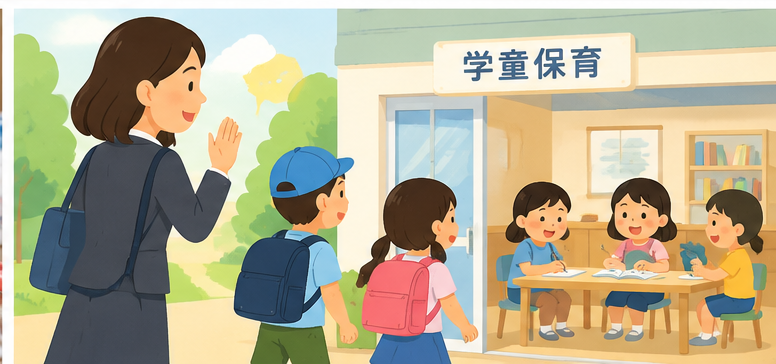
How gakudo is operated, its opening hours, and its activities vary by local government and facility. This means that summer vacation can look very different depending on a family’s work situation and local services.
Useful Points to Know
- Many elementary school children have summer homework.
- Some schools give independent research projects or other special assignments.
- School swimming pool programs vary by school and region.
- Some children in working households attend gakudo during summer vacation.
- Many summer days are ordinary days spent at home or in the local community.
There is no single way to spend summer vacation in Japan. Family schedules, local services, school rules, and children’s ages all make a difference.
Summer Vacation Is Part Holiday and Part Everyday Life
For Japanese elementary school children, summer vacation includes more than play. Homework, independent research, school activities, and childcare can all be part of the season.
In the next article, I will move away from school routines and share how our family enjoys summer in rural Japan, including river play, local festivals, and nagashi somen.

コメント