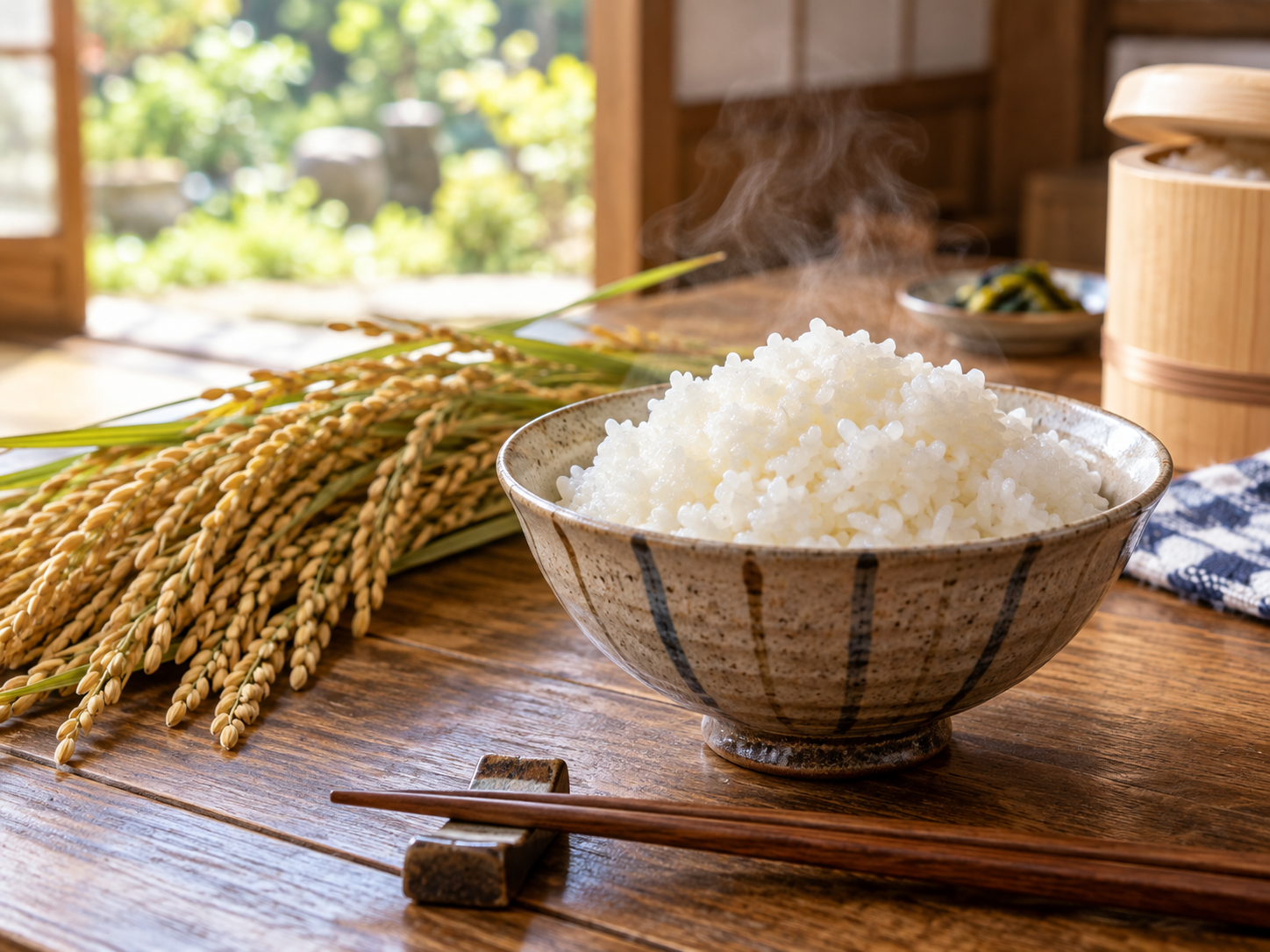
Autumn Can Be Felt in an Everyday Bowl of Rice
When people think about autumn food in Japan, sweet potatoes, chestnuts, and mushrooms may come to mind. Another word you often see in autumn is shinmai, or new rice.
Shinmai means rice harvested in the current year. When bags marked “shinmai” appear in supermarkets and rice shops, they are one sign that the harvest season has arrived.
Our children also look forward to the new rice season. Our favorite way to eat it is very simple: plain onigiri made only from freshly cooked rice, with no filling and no salt.
Because there is no seasoning, we can enjoy the aroma and natural sweetness of the rice itself.
What “Shinmai” Means and Why Rice Farming Is Hard Work
The harvest season for new rice is different depending on the region and rice variety. There is no single starting date across Japan, but September and October are common months to see new rice in many areas. Some regions and varieties are harvested earlier.
For readers outside Japan, one important point is that “shinmai” is not the name of a rice variety. Names such as Koshihikari and Akitakomachi are varieties. Shinmai simply means rice harvested in that year.
Japan is not a large country, and rice fields vary greatly in size and landscape from place to place. I have experienced rice farming myself. Even from that limited experience, I learned how much work is needed to grow, harvest, and prepare rice before it reaches our table.
Farmers do this work year after year. A bowl of rice may look ordinary, but many hours of work stand behind it. Since experiencing rice farming, I have felt more strongly that I should not forget how fortunate we are to be able to eat rice.
Our Family Experience: Plain Onigiri With Nothing Added
Our family eats rice often. I have written about onigiri before, and when the new rice season comes, our children look forward to it.
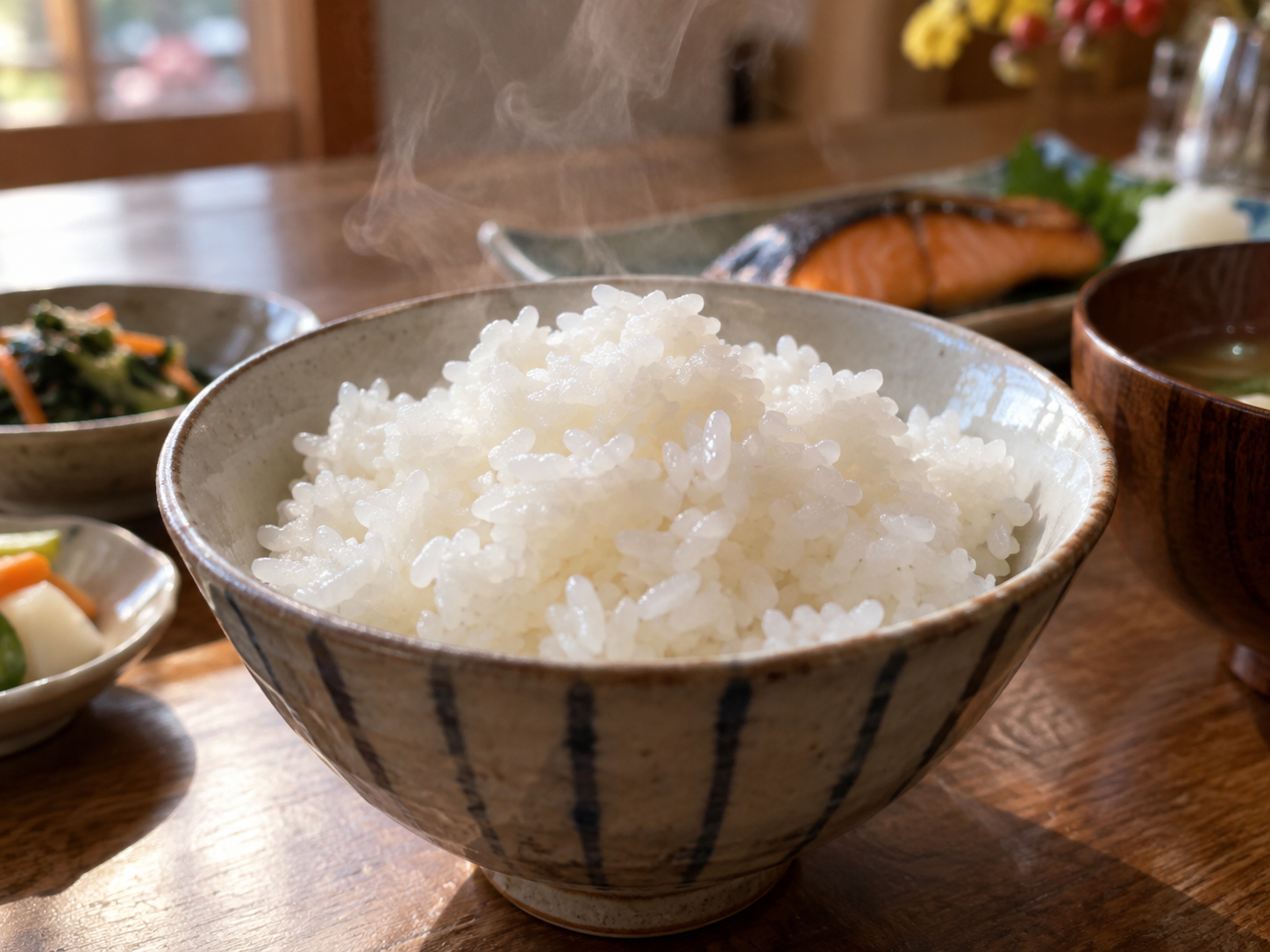
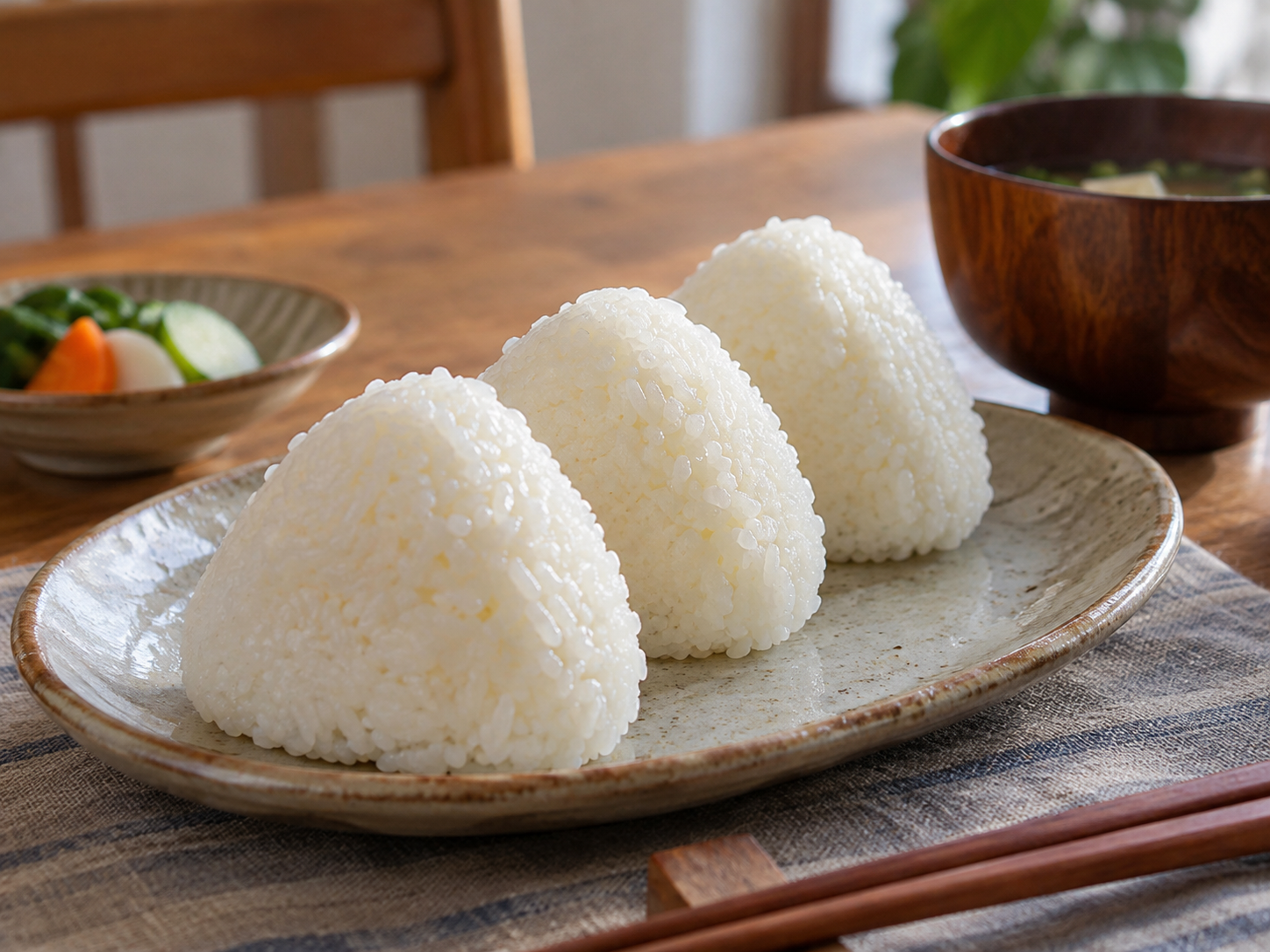
Our favorite way to eat shinmai is plain onigiri. We do not add salt or filling. We simply shape freshly cooked rice into an onigiri.
Without seasoning, we can notice the aroma, texture, and gentle sweetness of the rice. It is not a special or expensive dish, but for our family, it is the best way to enjoy new rice.
Where we live in Tochigi Prefecture, rice fields are part of the everyday scenery. We watch the plants grow from spring through summer, and then autumn brings the harvest. The rice we eat every day comes after that long process.
We also try not to waste older rice when new rice arrives. If some rice from the previous year is left, we use part of it to make rice koji, which we then use for our homemade miso.
Enjoying new rice while finding another use for older rice is one small part of how our family values food.
For Readers Outside Japan: Try Onigiri in Autumn
Rice is a familiar food in Japan, but every family has different habits. Some families look forward to shinmai every year, while others do not pay much attention to the season. Japanese families also eat bread, noodles, and many other foods.
Our way of enjoying plain onigiri and using older rice for koji is only one family example.
If you visit Japan in autumn, I recommend trying onigiri. There are many kinds with different fillings, but during the new rice season, a simple onigiri can be a good way to taste the rice itself.
If you see the word “shinmai” in a shop, remember that it is connected to the harvest season. Autumn in Japan is not only found in famous festivals or colorful leaves. You can also find it in an ordinary rice shop, supermarket, or onigiri.
Useful Tips for Enjoying New Rice
- First, try freshly cooked rice without adding anything.
- Notice the aroma, shine, texture, and gentle sweetness.
- If you make onigiri, try the first one without salt or filling.
- For the amount of water, follow the rice package or your rice cooker instructions because the best amount can vary.
You do not need to make it complicated. Simply slowing down and tasting an everyday bowl of rice can make shinmai more enjoyable.
A Bowl of Rice Can Show a Part of Japanese Autumn
Shinmai means rice harvested in the current year. The harvest time varies by region and variety, but new rice becomes easier to find in autumn.
Our children look forward to it, and our favorite way to eat it is plain onigiri with nothing added. I have also experienced rice farming, so the season reminds me of the work behind every bowl and of my gratitude to the farmers who grow it.
At the same time, we use some leftover rice from the previous year to make rice koji for miso. Enjoying the new harvest and making good use of older rice are both part of our family life.
You can also read our earlier story about Japanese rice and onigiri. Together, these everyday foods show how rice connects the seasons, family meals, and daily life in Japan.

コメント