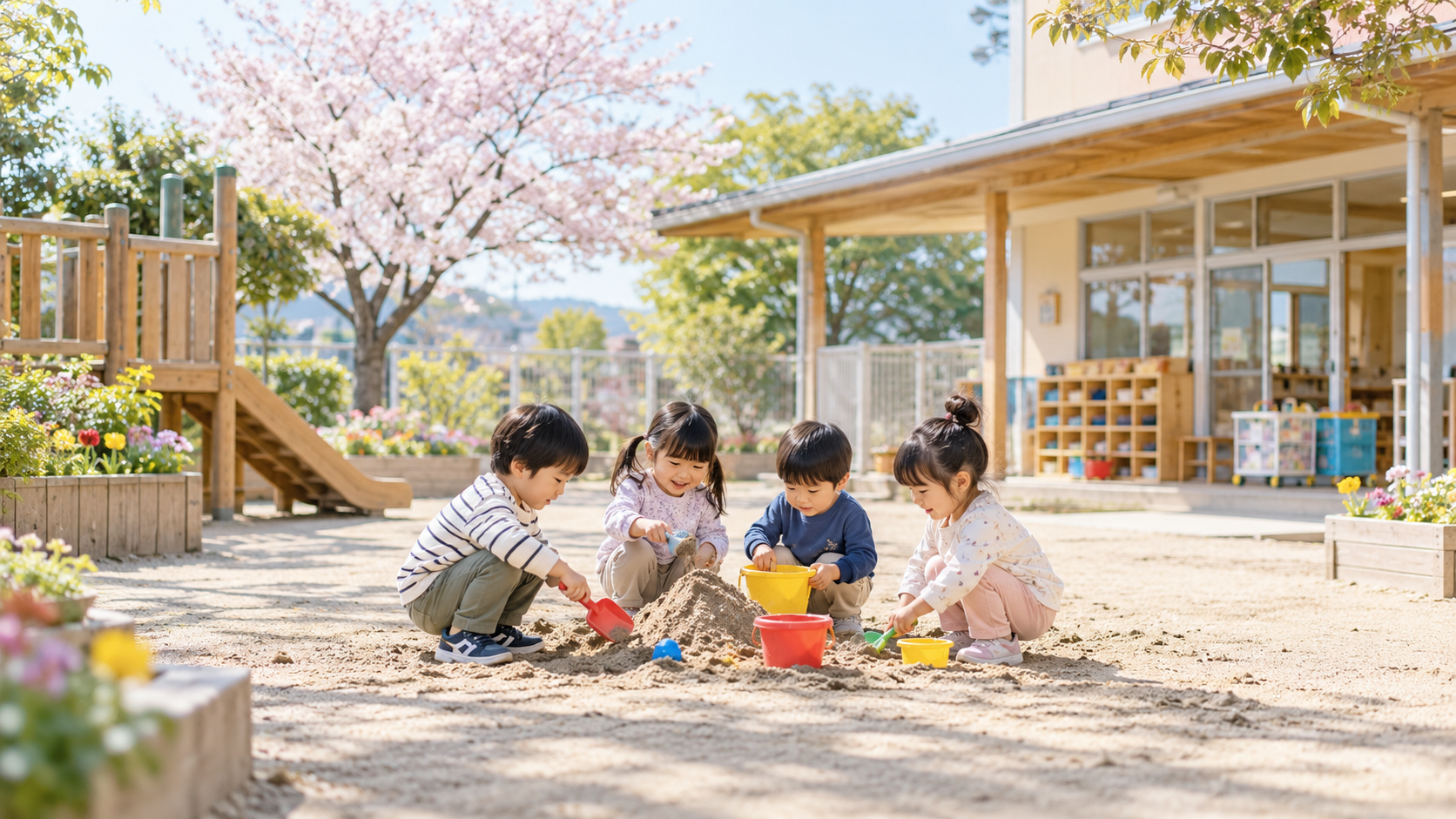
What Are Hoikuen and Yochien in Japan?
Before elementary school, children in Japan may attend hoikuen (nursery school) or yochien (kindergarten). To readers outside Japan, both may look like preschool or daycare, but their original roles are different.
Our child attends a hoikuen, so in this article I will explain the basic difference and share one example from our family.
The Basic Difference
Hoikuen mainly supports families who need childcare because parents are working or have another reason they cannot care for the child during the day. Yochien is legally treated as a school and has a stronger focus on early childhood education.
Today, however, the difference is not always simple. Hoikuen also provides learning through play and daily life, while many yochien offer extended childcare for working parents.
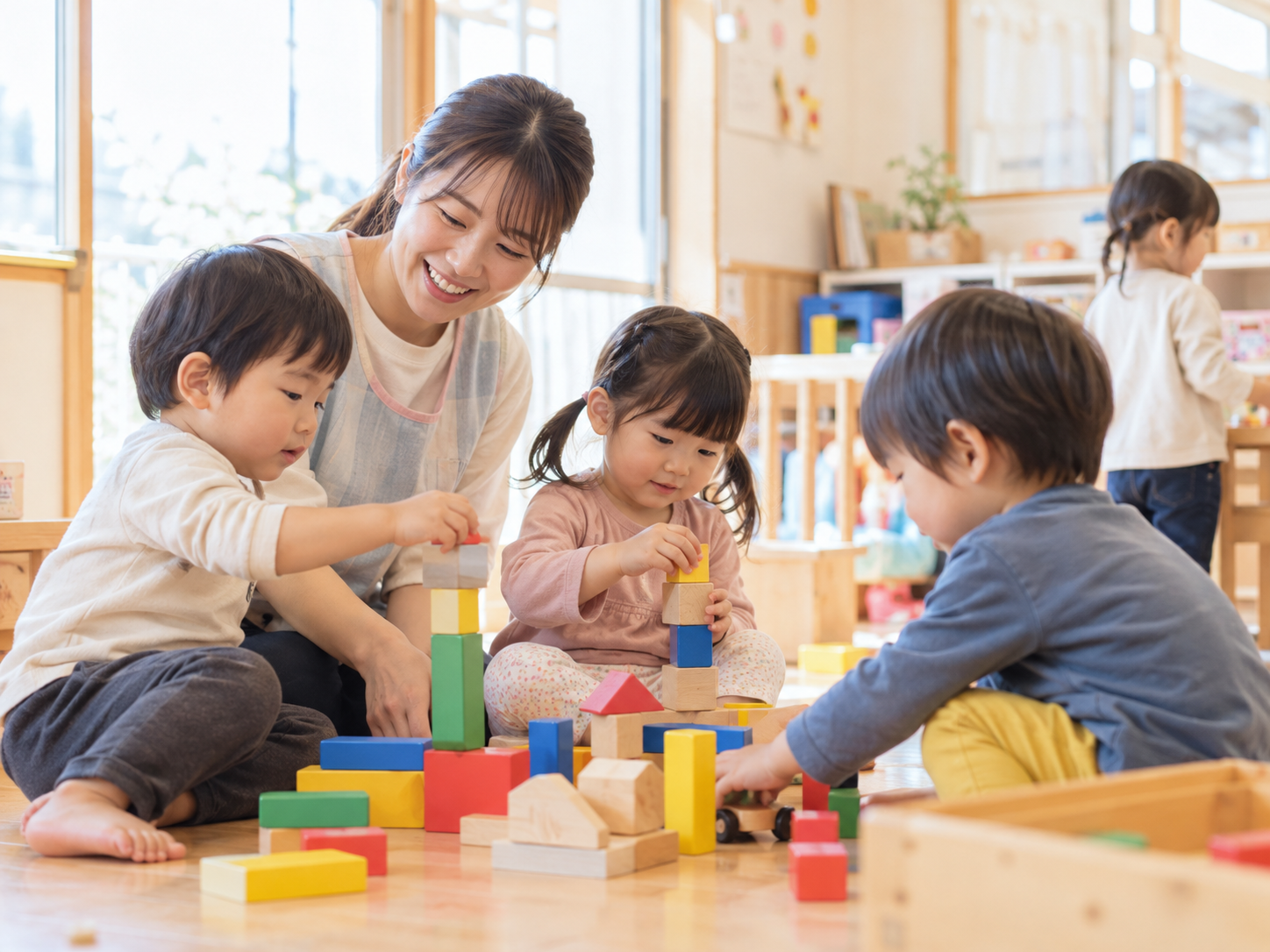
Our Hoikuen: Open from 7 a.m. to 7 p.m.
At our child’s hoikuen, children can be cared for from 7:00 in the morning until 19:00 in the evening. Many families around us use the service roughly from 8:00 to 17:00, depending on their work schedules.
In general, using an authorized hoikuen requires a recognized need for childcare. If neither parent is working and there is no other qualifying reason, it can be difficult to get a place.
What About Kindergarten?
In our area, many yochien have a shorter core day, often around 10:00 to 14:00. However, working parents may be able to use extended care before or after those hours, so the actual time a child stays can become similar to hoikuen.
Fees and Free Early Childhood Education
Japan has a national free early childhood education and childcare program for many children aged three to five. For younger children, fees can depend on household income and local rules. There are also support systems for families with several children, but the details vary by municipality.
Even when the basic childcare fee is free, families may still pay for meals, teaching materials, events, or other costs depending on the facility.
Families Can Choose a School by Its Character
Nursery schools and kindergartens in Japan can have very different styles. Some focus on music, English, art, or early learning. Others place more importance on outdoor play and physical development.
Parents can look at these differences when choosing a school, but getting into the first choice is not always possible. In large cities and densely populated areas, demand can be high. Some families may even have siblings at different facilities. In our rural area, we see this problem less often.
Why We Chose Our Hoikuen
Our child’s hoikuen places a strong emphasis on growing freely in nature and building a strong body and mind. The children spend a lot of time moving, climbing, running, and playing outside.
For our family, this matches what we value. Some families may prefer early academic learning, while we appreciate a place where young children can develop physical confidence and strength.
One Example of Childcare in Japan
Hoikuen and yochien have different roles in Japan, but their actual services can overlap. Hours, fees, activities, and educational styles also vary greatly from one facility to another.
In the next article, I will share our recent hoikuen sports day. It clearly shows the physical-development style that makes our child’s school special.

コメント