- Home Gardening in Japan and Our Family
- What Does Home Gardening in Japan Look Like?
- Home Gardening Can Be Part of Food Education
- Growing Food Can Create a Sense of Attachment
- Freshly Picked Vegetables Taste Special
- Japan’s Four Seasons and Seasonal Vegetables
- For Readers Outside Japan
- A Simple Way to Start with Children
- Home Gardening as Part of Everyday Family Life
Home Gardening in Japan and Our Family
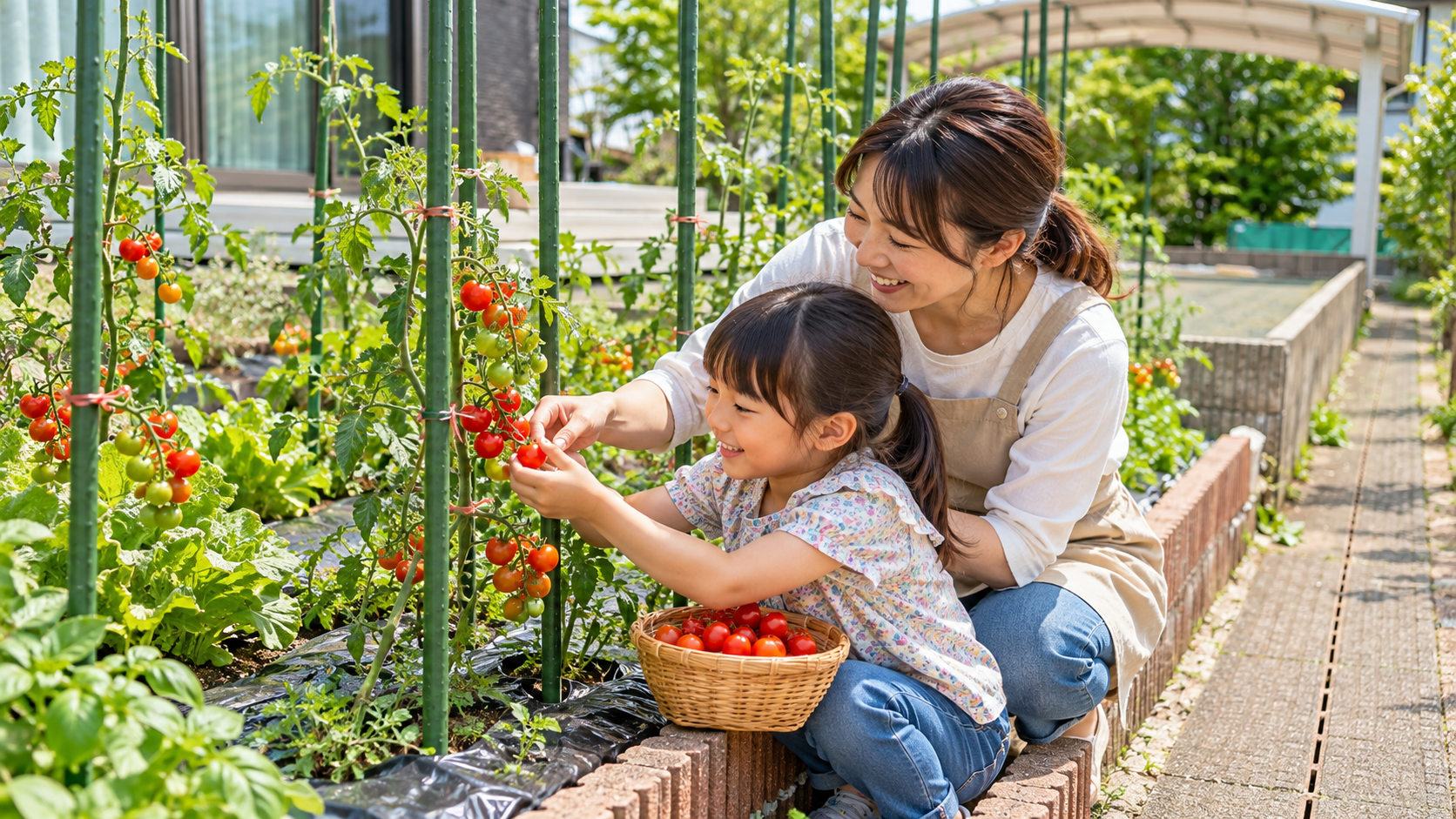
Our family grows several kinds of vegetables depending on the season, including cherry tomatoes and sweet potatoes.
Some families in Japan enjoy home gardening, but in our own area, not many people around us grow vegetables at home.
For us, home gardening is not only about harvesting food. It is also a way for our children to learn how vegetables grow.
What Does Home Gardening in Japan Look Like?
Home gardening in Japan can take many forms.
Some families use a small part of their garden. Others grow cherry tomatoes, cucumbers, peppers, and other vegetables in containers. In rural areas, some families have access to larger garden plots or fields, while people in cities may grow plants on balconies or in small spaces.
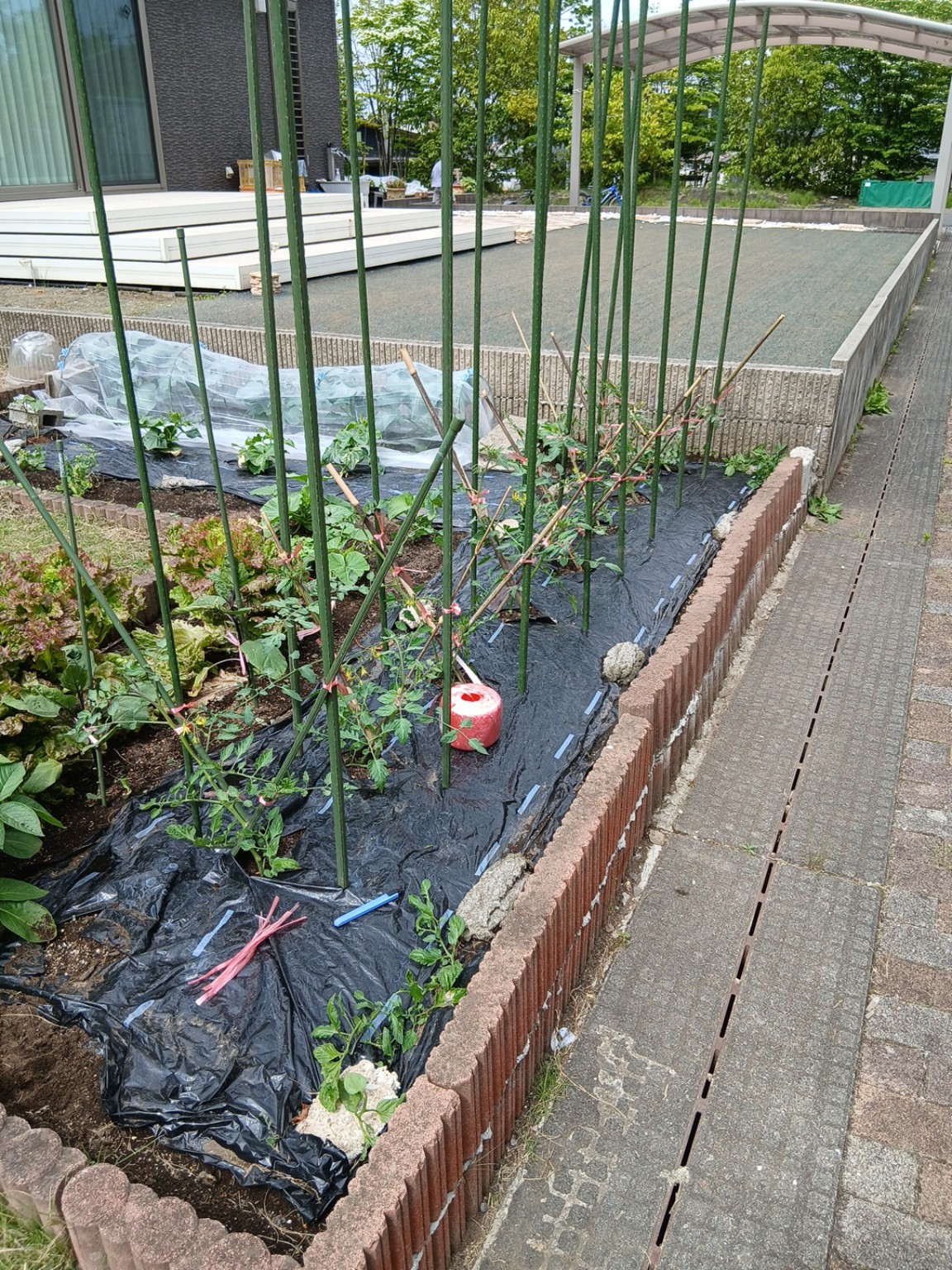
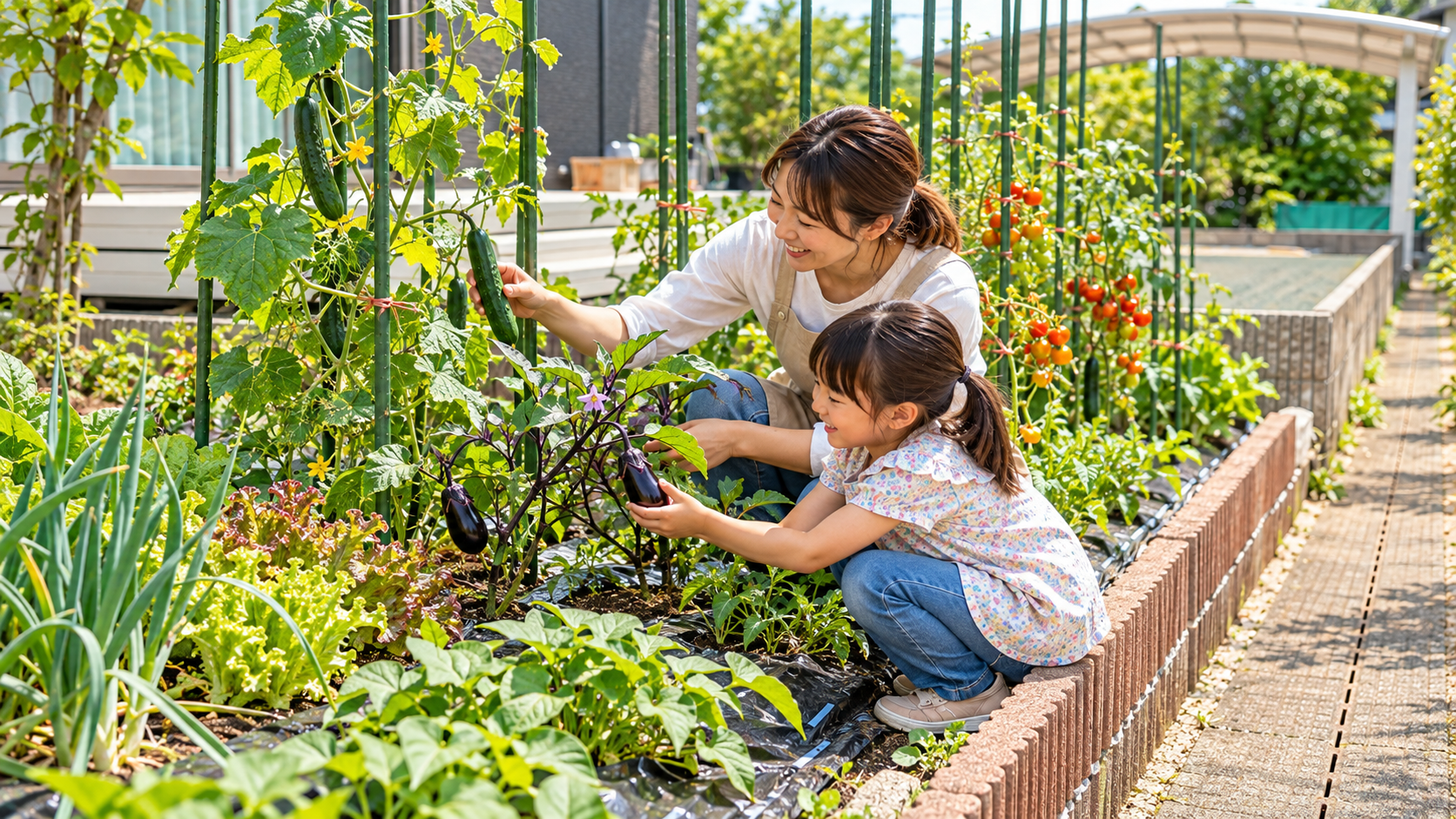
In our family, we grow cherry tomatoes, cucumbers, eggplants, sweet potatoes, potatoes, garlic, onions, lettuce, and other seasonal vegetables.
Still, this is only one example. In our own community, growing vegetables at home is not something every family does.
Home Gardening Can Be Part of Food Education
When children grow vegetables, they can see what food looks like before it appears in a supermarket.
They can watch a plant grow from a seed or small seedling, produce more leaves, flower, and finally make fruit. This helps them understand that food does not simply appear on a store shelf. It takes time to grow.
Our children see the vegetables change little by little every day.
Growing Food Can Create a Sense of Attachment
Vegetables that children help grow can feel a little more special to them.
We often hear comments like, “It is redder than yesterday,” “Can we pick it yet?” or “It has grown bigger.” These small conversations help children feel closer to the vegetables.
Sometimes, even a food they do not usually like can feel easier to try when they have watched it grow themselves.
Of course, home gardening does not automatically remove food dislikes. In our family, though, it gives the children another reason to become interested in vegetables.
Freshly Picked Vegetables Taste Special
One of the best parts of home gardening is being able to eat vegetables soon after picking them.
Cherry tomatoes are a good example. When they become fully red, we can pick them and eat them right away. They taste especially fresh and juicy.
Our favorite tomato variety is Sugar Plum. I personally like it very much and often recommend it to people around me.
Store-bought vegetables can also be very good, but eating something just after harvesting it is a different experience.
For our children, picking food themselves and then eating it is also a simple way to connect growing and eating.
Japan’s Four Seasons and Seasonal Vegetables
Japan has four seasons, so the vegetables that are easy to grow change throughout the year.
Tomatoes, cucumbers, and eggplants are common choices from spring into summer. Sweet potatoes are often harvested in autumn. Depending on the region and climate, families can also grow vegetables during the colder months.
By seeing different vegetables through the year, children can naturally learn that food has seasons, that different crops grow at different times, and that food is connected to weather and nature.
This can be one form of food education at home.
For Readers Outside Japan
Home gardening is not unique to Japan. Families in many countries grow vegetables and herbs at home.
In Japan, the clear seasonal changes can make it easier to experience different vegetables at different times of the year.
At the same time, not every Japanese family has a home garden. Space can be limited, especially in cities, and many families are busy with work and childcare.
This article is simply one example from our family life in Tochigi Prefecture.
A Simple Way to Start with Children
You do not need a large garden to begin.
Vegetables such as cherry tomatoes can be a good starting point because children can easily see the fruit grow and change color.
For us, the most important part is not how much we harvest. It is the whole experience: watching the plants grow, picking the vegetables, and eating them together.
Home Gardening as Part of Everyday Family Life
For our family, home gardening is more than a way to produce vegetables.
Our children can learn how food grows, notice the seasons, and enjoy the taste of freshly picked vegetables.
Not every family in Japan gardens at home, but for us, it is one simple way to help children feel closer to food.

コメント